AI seo for Shopify: rank on google and get cited by ChatGPT in 2026
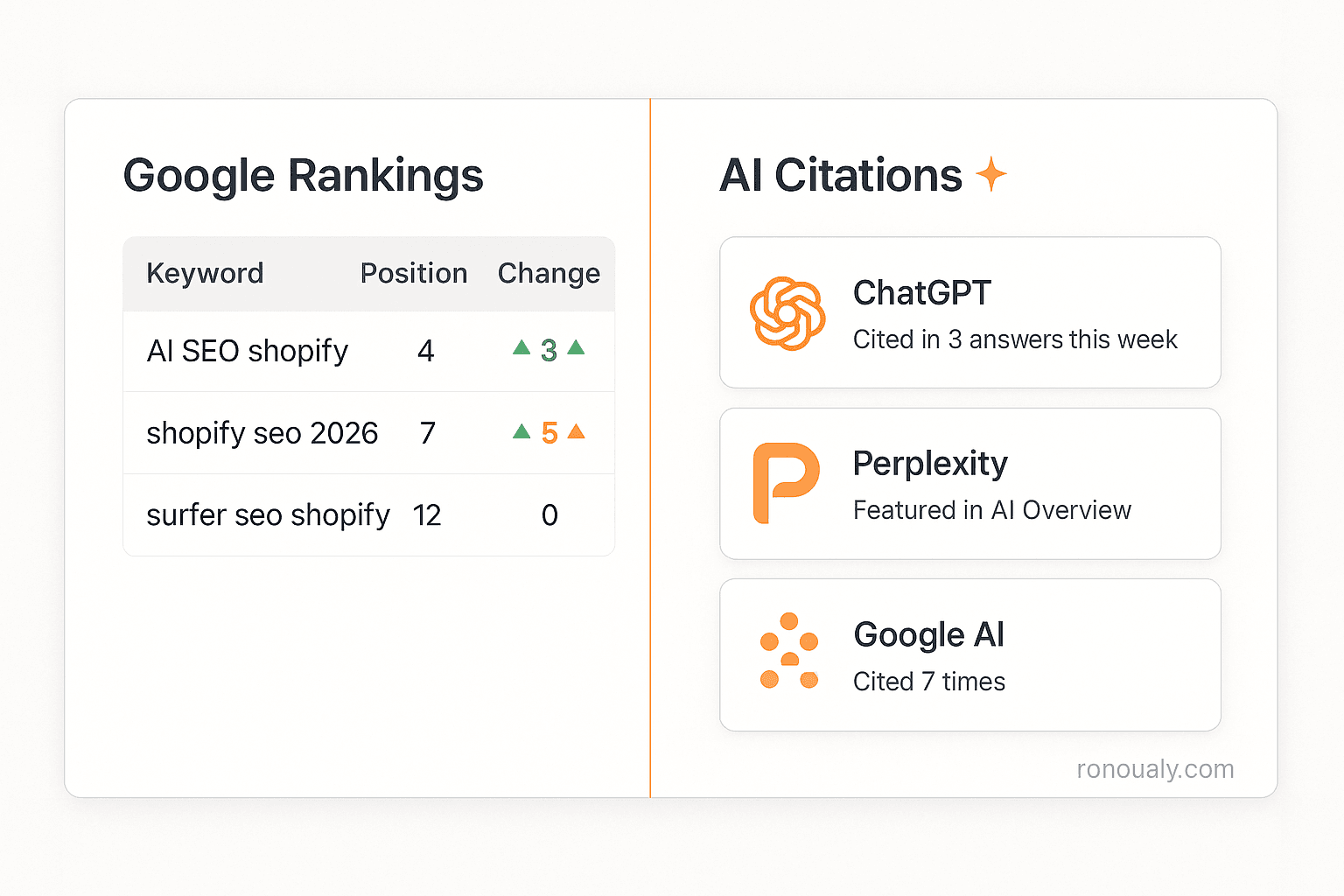
AI SEO is changing how Shopify stores get found. In 2026, ranking on Google still matters. But more shoppers now get product and tool picks straight from ChatGPT, Perplexity, and Google’s AI Overviews. If your store isn’t in those answers, you’re invisible to buyers who never see a normal results page.
SEO and decision-making are linked: choosing which keywords to target is a data problem. The AI decision-making guide for Shopify DTC founders covers that framework.
The founders growing organic traffic in 2026 aren’t choosing between Google SEO and AI search. They build one content strategy for both. They use AI tools to write better content faster, and they structure it so it gets cited.
This guide gives you the full playbook.
Why Shopify stores now need two seo strategies
Until 2024, SEO was a single game: rank on Google, get traffic. In 2026, that model is incomplete.
The traditional channel: Google still drives the majority of organic e-commerce traffic. High-intent buyers searching “best Shopify inventory tool” or “how to reduce cart abandonment” click through to blog posts and product pages. Google SEO fundamentals — keyword-optimized content, technical performance, backlinks — still apply and still convert.
The AI channel: ChatGPT, Perplexity, and Google’s AI Overviews now answer many product and tool questions directly. Ask ChatGPT “what’s the best tool to recover abandoned carts on Shopify?” and it gives a direct answer that cites a few sources. If your content isn’t built to be cited, it won’t be.
AI SEO for Shopify stores is a two-part strategy. First, use AI tools like Surfer SEO and Jasper AI to produce Google-optimized content at scale. Second, structure that content so AI search engines cite it, including ChatGPT, Perplexity, and Google AI Overviews. This second layer is called GEO (Generative Engine Optimization). It needs content that stands on its own, states specific facts, and is formatted so AI models can pull out clean answers without the surrounding text.
The two strategies reinforce each other. Strong Google rankings signal authority to AI models. AI citations drive branded search that improves Google rankings. The compound effect builds over 6-12 months.
Part 1 — traditional google seo for Shopify stores
Target keywords with buyer intent
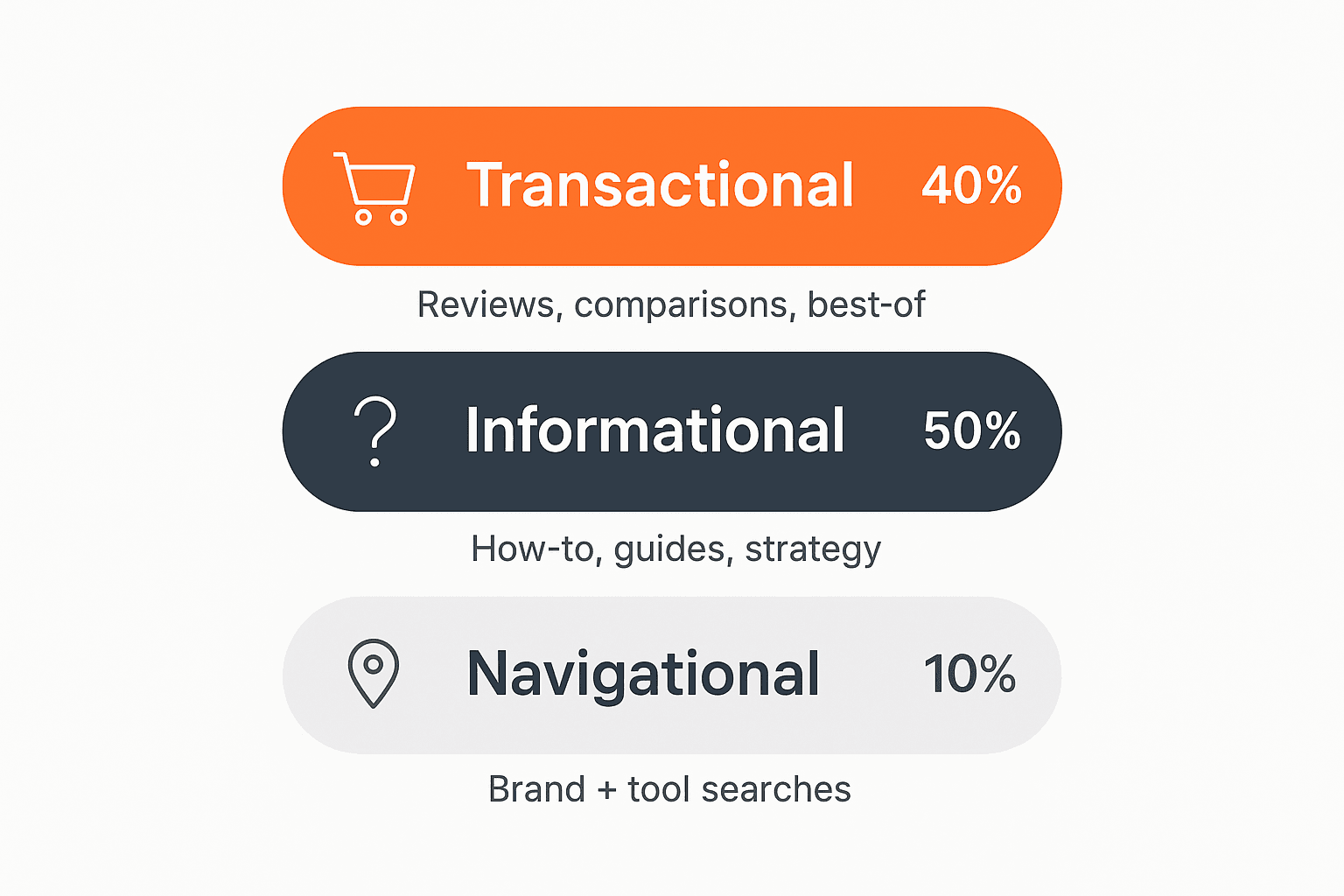
For Shopify stores, the highest-ROI keywords fall into two categories:
Transactional keywords — “best [tool] for Shopify,” “[tool] review 2026,” “[problem] solution Shopify.” These signal buyers ready to decide. One article ranking here can generate consistent affiliate revenue or direct signups month after month.
Informational keywords: “how to [solve specific problem] Shopify” or “Shopify [topic] guide 2026.” These build authority, reach readers early in their research, and support the network of content that shows Google you know the topic.
A common mistake is writing only informational content, with no commercial articles, and then wondering why there’s no revenue. A reasonable starting mix is roughly 40% transactional (comparisons, reviews, best-of lists), 50% informational (how-tos, guides), and 10% navigational. Adjust it once you see what earns.
Tool for this: Surfer SEO’s Keyword Research surfaces keyword clusters with search volume and difficulty scores. For each article, it shows the exact keywords your top-ranking competitors use — and the gaps you can fill. → Surfer SEO
Optimize every piece of content with surfer
Writing without a keyword target is guessing. Surfer SEO’s Content Editor gives you a live optimization score as you write. It flags missing keywords, a better heading structure, and a word count based on what already ranks for your term.
The workflow:
1. Enter your target keyword into Surfer’s Content Editor
2. Write your article while keeping the optimization score above 70
3. Use Surfer’s NLP recommendations to include semantically related terms
4. Run Surfer Audit on existing articles for quick ranking improvements
Surfer doesn’t game the algorithm. It helps you write a more complete page than the ones already ranking, which is what gives an article a chance to climb. Track each article’s position in Search Console to see whether it’s working for you.
Fix your technical foundation first
AI tools can’t compensate for a broken technical foundation. Before any content optimization:
- Core Web Vitals: LCP under 2.5s, INP under 200ms, CLS under 0.1. Shopify themes with heavy app loads frequently fail this. Test at pagespeed.web.dev.
- Mobile optimization: 65%+ of Shopify traffic is mobile. Every page must render correctly and load fast on mobile.
- Crawlability: Verify Google Search Console has no crawl errors. Submit your sitemap. Ensure all key pages are indexed.
- Canonical URLs: Shopify generates duplicate URLs by default (?variant=, collections/all/). Use Rank Math to set canonical tags on all product and collection pages.
These fixes take a day. Ignoring them wastes every dollar you spend on content.
Part 2 — AI citation optimization (geo) for Shopify
Structure content so AI can extract it
AI models don’t read articles like people do. They parse structure, pull out factual passages, and build answers from them. If your content is written only for human reading, with long narrative paragraphs and context spread across sections, AI models struggle to pull a clean answer. They cite someone else.
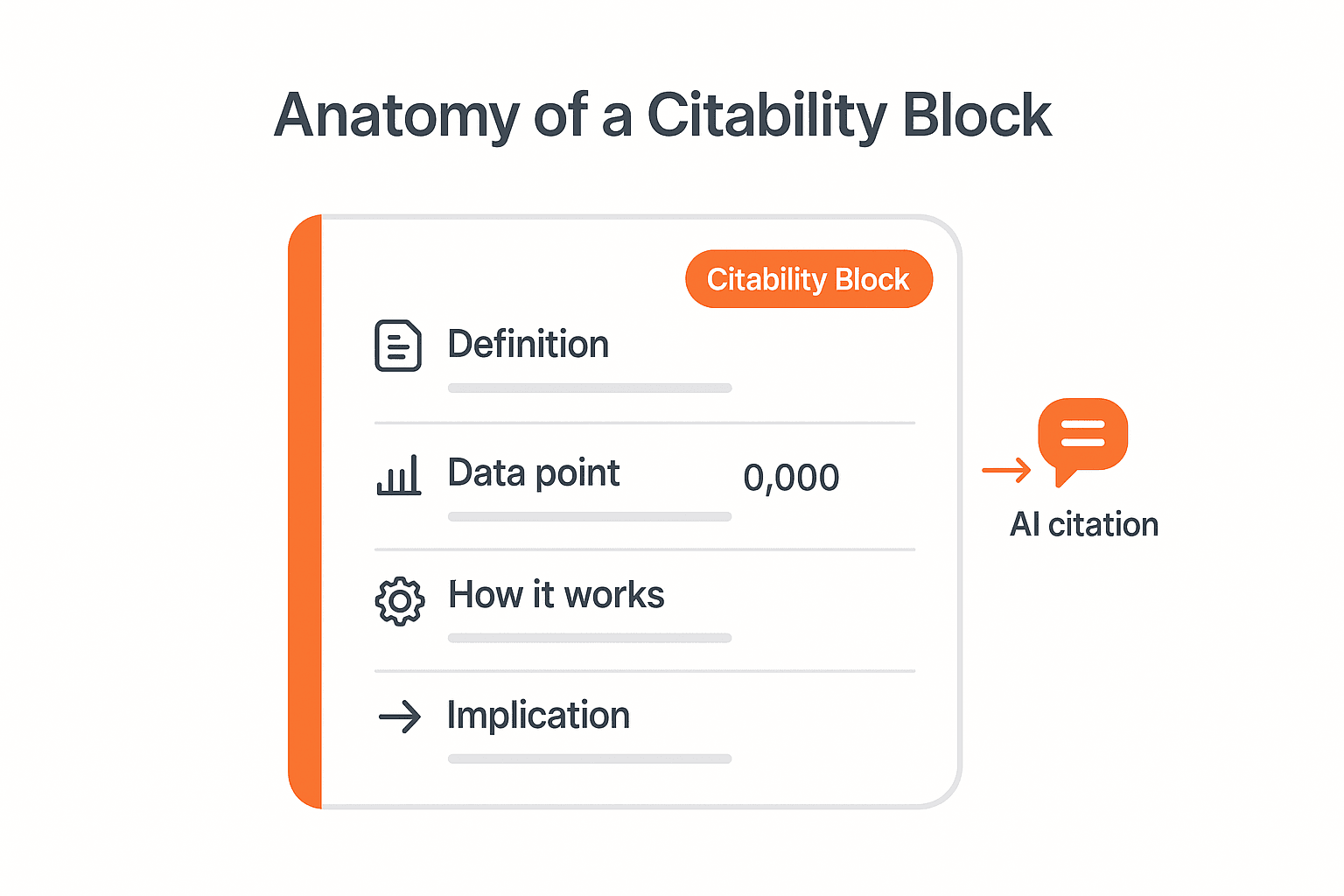
The citability block pattern: write 2-3 self-contained passages per article, about 130-170 words each. Each one should define a concept, include a specific sourced fact, and make sense on its own. These are the passages AI models pull out. Write them on purpose.
What works:
“[Topic] is [clear definition]. [Specific detail with number]. [How it works in practice]. [Why it matters for Shopify founders].”
What doesn’t get cited: Narrative storytelling, vague advice (“consider using AI tools”), or sentences that require surrounding context to make sense.
Answer questions AI engines actually ask
AI models are trained on the questions people ask. The most-cited Shopify content answers specific, high-frequency questions:
- “What is the best [tool] for Shopify stores?”
- “How does [process] work for Shopify?”
- “What are the costs and ROI of [tool/strategy]?”
- “How do I [specific action] on Shopify step by step?”
Every H2 in your article should work as a standalone question. The FAQ section at the bottom is especially useful, since AI models often pull FAQ answers word for word. Use Google’s People Also Ask boxes to find the exact questions people ask about your topic. Then answer each one in 100-150 words.
Build the authority signals AI models recognize
AI models assess whether you’re a credible source worth citing:
Cross-platform presence: content mentioned on Reddit, Quora, YouTube, and LinkedIn carries weight with AI models. Answering relevant questions in communities like r/shopify, with links to your articles where they truly help, builds both authority and the chance of being cited.
Consistent author attribution: Named authors with verifiable expertise increase citation likelihood. A byline of “Sarah Blake, covering AI tools for Shopify DTC brands” is more citable than “Ronovaly Staff.”
External citations in your content: articles that cite primary sources (Klaviyo benchmarks, Shopify data, industry reports) send stronger trust signals to both Google and AI models. One cited fact per section is enough.
→ Full AI strategy framework in the AI Decision Making for Shopify guide
The two tools that do the heavy lifting
Surfer seo — keyword optimization at scale
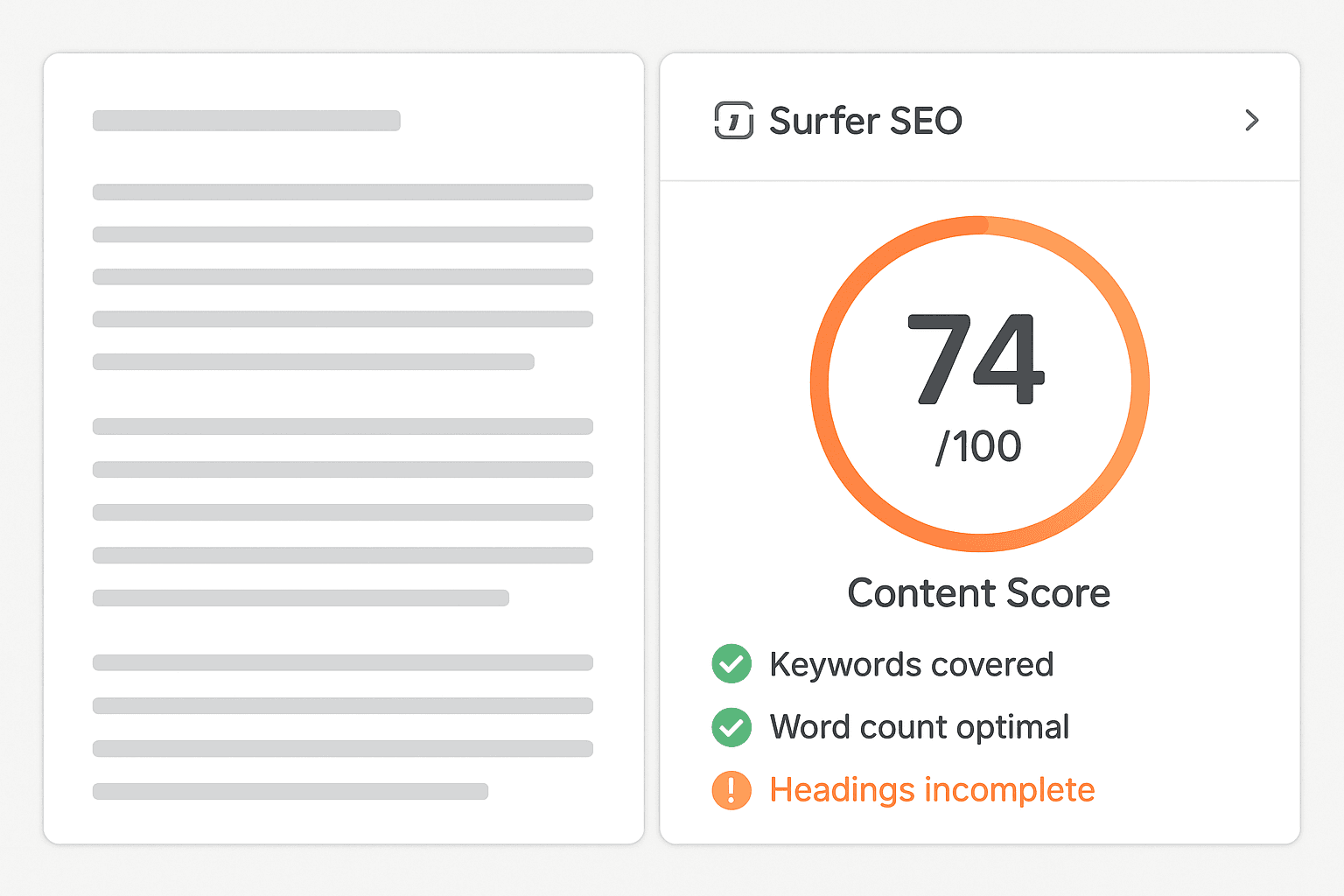
Surfer SEO connects directly to Google’s ranking signals. Its Content Editor scores your article against the top 10 competitors for your target keyword, showing exactly what’s missing. Its Keyword Research tool identifies high-opportunity clusters you’d otherwise miss.
For Shopify content creators, Surfer’s most useful feature is Topical Authority Maps. It lists the full set of articles you need to cover a whole keyword cluster, not just single terms. That’s how you build the depth that makes you the go-to source in your niche.
In practice, use the topic clusters to plan your content calendar, so each new article fills a gap in a cluster instead of standing alone.
Pricing: From $89/month (Essential). → Try Surfer SEO
Jasper AI — first draft in 20 minutes
Jasper generates SEO-optimized first drafts based on your keyword and brief. For Shopify founders writing 2-4 articles per month, it eliminates the blank-page problem and cuts writing time by 60-70%.
The workflow: enter the keyword and article brief into Jasper, generate a first draft, edit for brand voice and facts, run it through Surfer for keyword optimization, then publish. Time your first few articles this way against writing from scratch, so you know your real saving.
Jasper’s templates cover product descriptions, comparison articles, and how-to guides. Those are the three content types most Shopify-focused blogs rely on.
Pricing: From $49/month (Creator). → Try Jasper AI
→ See the full Jasper + Surfer workflow in the Shopify content writing guide
Your 90-day AI seo action plan for Shopify
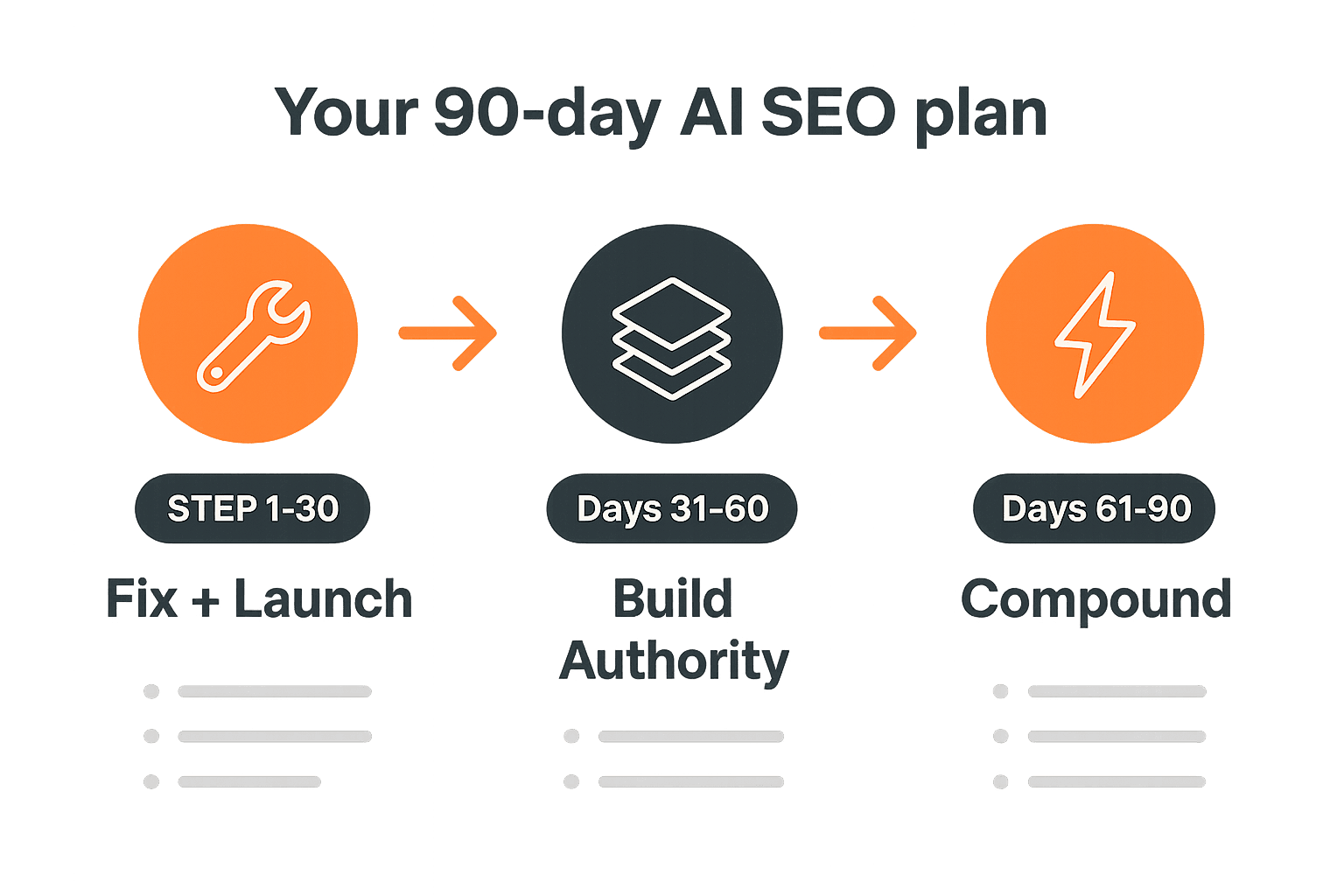
Days 1-30: fix foundations and start publishing
– Run a technical audit (Core Web Vitals, crawlability, canonical URLs). See how to speed up your Shopify store
– Set up Surfer SEO and research keywords for your top 5 topics (use SparkToro to map where your audience searches)
– Write your first 4 articles in Surfer’s Content Editor (target score: 70+)
– Add 2-3 citability blocks to each article
Days 31-60: build topical authority
– Write 4 more articles to complete your first keyword cluster
– Submit all articles in Google Search Console and watch indexing
– Find your top 5 FAQ opportunities in People Also Ask and build FAQ sections
– Start a Reddit presence: answer relevant questions and link where it helps
Days 61-90: measure and build on it
– Check Search Console for articles on page 2 and improve them with Surfer’s Audit
– Test AI citation: ask ChatGPT and Perplexity questions your articles answer, and see if you appear
– Find your most-cited articles and reuse their structure for new content
– Build internal links: every new article links to your pillar and 2 related spokes
The 90-day plan has three phases. In the first 30 days, technical fixes and the first keyword-optimized articles make your site easy to crawl and start a topic signal. In days 31-60, a complete keyword cluster builds the topical depth Google rewards. In days 61-90, you measure what’s working and build on it, as links spread across the cluster and articles gain authority. Timelines vary by niche and competition, so treat these as phases, not promises.
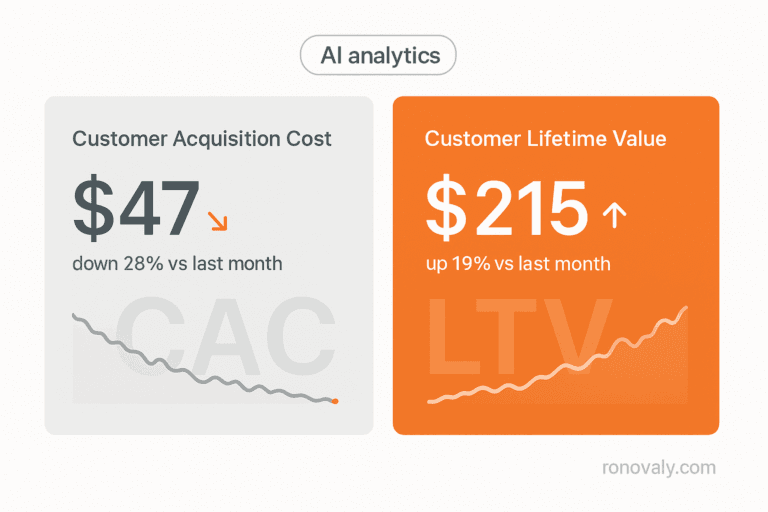
→ For the analytics and decision-making layer, see How DTC Brands Use AI Analytics to Cut CAC and Grow LTV and Best AI Tools for Shopify in 2026
Related guides: for next steps, see our Perplexity Shopping setup guide; AI visibility monitoring tools compared.
Frequently asked questions
Do Shopify stores need a blog to rank on google?
Yes — product and collection pages alone rarely rank for informational keywords, which drive the majority of organic e-commerce traffic. A blog captures “how to” and “best X for Shopify” searches that lead buyers into your content funnel. Most Shopify stores that rank consistently publish at least 2 articles per month. Without a blog, you’re competing only on branded and transactional terms, where established players dominate.
What’s the difference between SEO and GEO for Shopify?
SEO (Search Engine Optimization) helps content rank in Google’s classic blue-link results. GEO (Generative Engine Optimization) structures content so AI search engines like ChatGPT, Perplexity, and Google AI Overviews cite it. In 2026, both matter. Google still drives most organic traffic, but AI answers reach buyers who skip the results page entirely. The same content can serve both when you write it with citation in mind.
Is surfer seo worth it for a small Shopify blog?
It depends on how often you publish. If you write 2+ articles a month, Surfer’s Content Editor can pay for itself by helping pages rank that otherwise wouldn’t. If you write one article a month or less, start with free keyword tools and upgrade when you publish more. Check Surfer’s current pricing page and compare it with what one extra ranking article is worth to you.
How long before AI models start citing my Shopify content?
There’s no fixed timeline. Your odds improve when content is well structured, has a named author, and is indexed by Google. AI tools refresh their sources at different speeds: Perplexity searches the live web for each answer, while other tools update less often. Publishing steadily and building internal links helps.
Can I use only Jasper AI without Surfer seo?
You can, but you’ll miss keyword optimization. Jasper is a writing tool, not an SEO tool. It writes fluent content but doesn’t analyze which keywords you need to rank. Without Surfer, your content may read well but underperform in search. Jasper for speed plus Surfer for optimization is what makes the workflow compete at scale.
The bottom line
Shopify stores that only optimize for Google miss a growing discovery channel. Build for both: use Surfer SEO to rank on Google in a systematic way, and structure content so AI models like ChatGPT and Perplexity cite it.
The two channels reinforce each other. Start with technical fundamentals, build a complete keyword cluster, and write with citability in mind from the first article.
→ For the wider AI strategy that connects SEO to attribution, retention, and pricing decisions, read the AI Decision Making for Shopify guide
This post contains affiliate links. If you make a purchase through these links, we may earn a commission at no extra cost to you.