Jasper AI + Surfer SEO: How to Write Shopify Content 10x Faster
Jasper AI and Surfer SEO solve two different problems. Using only one of them is a common reason AI-assisted content doesn’t rank. Jasper writes the draft. Surfer tells you whether that draft can compete with what already ranks. Used together, the workflow below cuts writing time while producing pages built to compete, not just pages that exist.
This is part of the AI productivity stack for Shopify founders. If you’re still on the free option, read our Shopify Magic review first. This workflow is the next step once Magic’s generic output isn’t enough.

What Each Tool Actually Does (and Why You Need Both)
Jasper is an AI content platform built to write on-brand copy: long articles, product descriptions, and ad copy. Its writing engine is tuned to sound human, not generic. Surfer SEO is a content optimization platform. It studies what ranks for your target keyword and scores your draft against those pages on structure, keyword use, and depth.
Here’s the key difference. Jasper answers “can I produce this fast?” Surfer answers “does this actually compete?” A fast draft that doesn’t match what ranks is wasted effort. A perfect brief with no draft behind it is just a spreadsheet. The workflow below uses both: Surfer for the analysis and brief, Jasper for the draft, and a human editor for the final accuracy and brand-voice pass.
What You’ll Need
- A Surfer SEO plan with the Content Editor (Essential tier and above)
- A Jasper AI Pro plan, which is required for the direct Surfer integration
- Combined, the integrated stack runs about $148/month — Jasper Pro plus Surfer Essential
- 30-45 minutes for your first run-through of the full workflow per article
Step 1: Build the Brief in Surfer
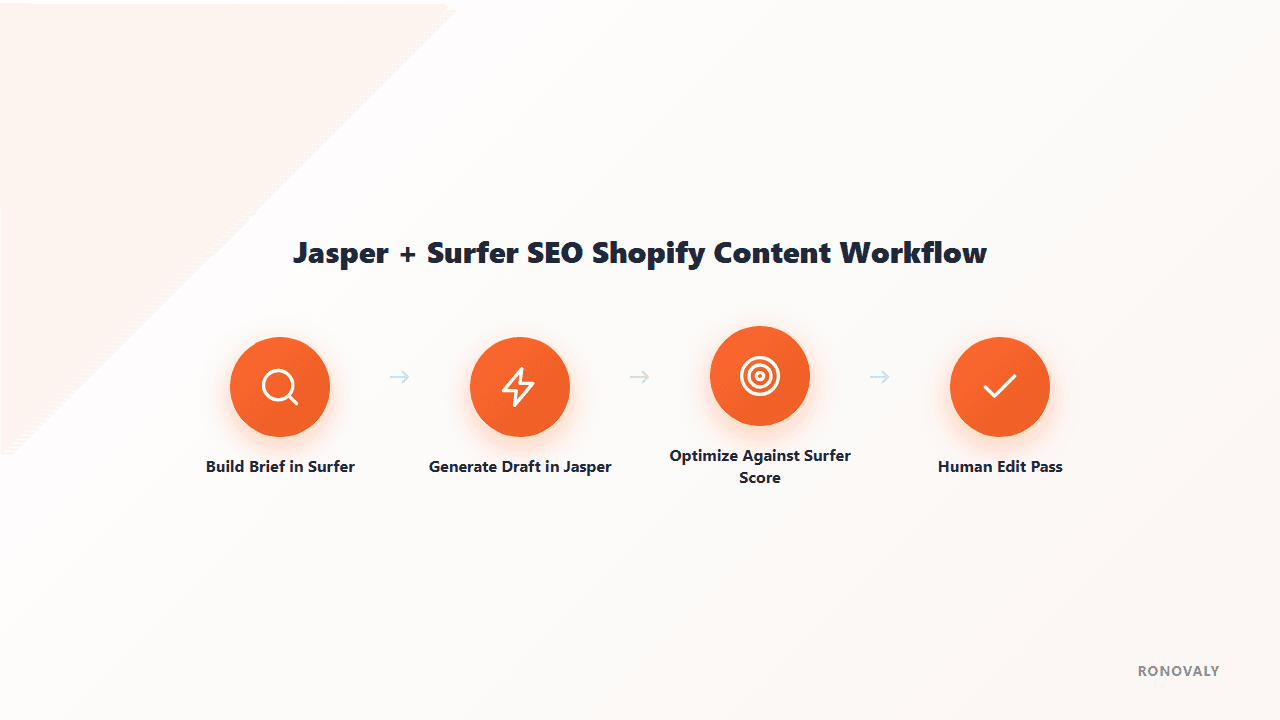
Start in Surfer, not Jasper. Enter your target keyword and let Surfer analyze the top-ranking pages. It returns a target content score, a word count range, and the terms and subtopics your page needs to cover. That brief becomes the spec Jasper writes to. You no longer start from a blank page and guess what “good” looks like.
Here’s how the two tools connect. Surfer’s Content Editor analyzes the top-ranking pages for a keyword and builds a brief: a target score, a word count range, and the terms and subtopics top competitors cover. Jasper then drafts against that brief, instead of writing from the keyword alone with no sense of the competition. The order is deliberate. Surfer handles analysis and the brief first. Jasper writes the draft second. A human editor checks accuracy and brand voice last. Each tool does the one job it does best, and neither is expected to run the whole process alone.
Step 2: Generate the Draft in Jasper
With the Surfer brief as your spec, write the first draft in Jasper. Give it your brand voice guidelines along with the brief’s target terms and subtopics. Jasper’s output depends heavily on how specific its input is. A Surfer brief gives it far more to work with than a bare keyword.
For Shopify content, this is where Jasper earns its cost over free Shopify Magic. Magic handles single product descriptions well, but its long-form output, like buying guides or comparisons, is thin and generic. Jasper, fed a real competitive brief, handles the long-form work Magic struggles with.

Step 3: Optimize Against the Surfer Score
Paste the Jasper draft back into Surfer’s Content Editor. Surfer scores it live against the same benchmark from Step 1. It flags specific gaps: missing subtopics, thin sections, and keywords used less than the target. Revise in the editor until the score clears your target, often 70+ on Surfer’s 100-point scale for a competitive keyword.
This loop (draft, score, revise) is where most of the quality gain happens. A first Jasper draft rarely clears the target score on the first try. Expect two or three rounds of fixes against Surfer’s flagged gaps.

Step 4: Human Edit Pass (Non-Negotiable)
Once the draft clears its Surfer score, it still needs a human pass before you publish. Check the facts, the brand voice, and add the specific detail an AI draft can’t produce on its own. A high Surfer score means the structure competes. It doesn’t mean every claim is accurate, or that it sounds like your brand.
Skipping the human edit is the biggest mistake in an AI-assisted workflow. A high Surfer score can make a draft look ready when it isn’t. Surfer measures structure and coverage against competitors. It doesn’t check facts or brand voice. Those stay the editor’s job. Pages that skip this step tend to read like AI and earn less reader trust, even when they rank. Make the edit pass a required step, not optional polish. Budget real time for it on every long-form article.
Estimating Your Time Savings
Illustrative example (hypothetical): say a long-form buying guide takes you 4 to 5 hours of research, drafting, and SEO structuring by hand. The Surfer-brief, Jasper-draft, Surfer-revise, human-edit workflow is designed to hand most of that work to the tools and leave you with the edit. Time your first three articles before and after, rather than trusting a “10x” marketing claim.
Common Mistakes
Starting in Jasper instead of Surfer. A draft written from a bare keyword, with no competitive brief, reads well but doesn’t compete on structure. You’ll end up building the brief afterward anyway, with more rework.
Treating the Surfer score as the finish line. A high score means the draft is structurally competitive, not that it’s accurate, on-brand, or ready to publish. The human edit pass is part of the workflow, not a nice-to-have.
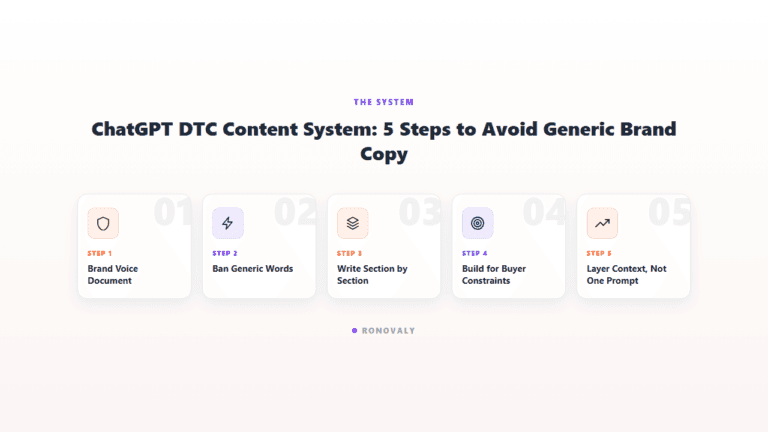
Using generic brand voice settings. Jasper’s brand voice is only as good as the guidelines you give it. A vague “professional but friendly” setting gives noticeably more generic output than real sample copy and specific word preferences. See the ChatGPT DTC content system for the format a usable brand voice document should take.
Using this workflow for every content type. This pairing is built for long, competitive, SEO-driven content: buying guides, comparisons, and pillar pages. For quick product descriptions, Shopify Magic alone is faster and good enough. Save the full Jasper + Surfer workflow for content that competes for rankings.
FAQ
Do I need both Jasper AI and Surfer SEO, or can I use just one?
Using only one significantly weakens the workflow. Jasper alone produces fast drafts without competitive context, often missing what’s actually needed to rank. Surfer alone provides excellent analysis and briefs but no content generation — you’d still need to write the draft manually. The combination is what makes this workflow different from either tool used in isolation.
How much does the Jasper + Surfer SEO workflow cost?
You need a Jasper plan that includes the Surfer integration, plus a Surfer SEO plan with the Content Editor. Check both vendors’ current pricing pages, since plans change often. Then compare the monthly total with the hours you save on your own first few articles.
Is AI-generated content from this workflow good enough to rank on Google?
It can be, but only with the human edit pass. The Surfer score covers structure and competitive coverage. It doesn’t cover factual accuracy or the real-experience signals that set truly helpful content apart from content that just covers the right topics. Skip the edit and you risk pages that rank but don’t earn trust or sales.
What’s a good Surfer SEO score to aim for before publishing?
70 or above on Surfer’s 100-point scale is a sensible target for a competitive keyword. The right bar depends on how competitive the keyword is. A first Jasper draft rarely clears it on the first try, so expect two or three rounds of fixes before publishing.
Should I use this workflow for product descriptions too?
No. This workflow is built for long-form, SEO-competitive content like buying guides and comparisons. For single product descriptions, Shopify Magic is faster, free, and good enough for most catalogs. Keep the full Jasper + Surfer workflow for content that truly competes for rankings.
Key Takeaways
- Jasper generates drafts fast; Surfer confirms whether those drafts actually compete — using only one weakens the workflow significantly.
- Start in Surfer to build the competitive brief before generating anything in Jasper.
- A high Surfer score means structural competitiveness, not publish-readiness — the human edit pass is a required step, not optional polish.
- Treat the marketed “10x” as a claim, not a benchmark: time your own articles before and after to see what the workflow actually saves you.
- Reserve this workflow for competitive, long-form content — use the free Shopify Magic for quick product descriptions instead.
For the wider AI tool stack this fits into, see the AI productivity stack for Shopify founders. For the AI search angle this content should also target, see AI SEO for Shopify.
This post contains affiliate links. If you make a purchase through these links, we may earn a commission at no extra cost to you.